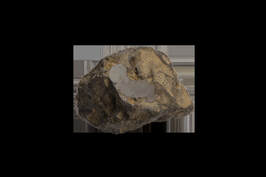
Tips for Finding and Handling Meteorites
Produced by the Stellar Consortium & Meteorite Recovery Team Tango from real-world meteorite recovery experience
Based on hands-on meteorite hunting and recovery, these practical tips will help you safely collect and preserve meteorites while contributing to science. There are many great resources and information from reputable sources on the Web. Below is based on our experience finding and recovering meteorites with tips we don't see shared elsewhere. Judge for yourself.
Key Tips for Picking Up Potential Meteorites
Debunking Common Meteorite Myths
The media often understates how many meteorites reach the ground. Museums like the Smithsonian Institution display thousands of specimens.
The Boston meteor event on Saturday, May 30, 2026, is a recent example where trajectory and landing zone reports needed calibration. Local Boston news media said at the time that the meteorite probably 'fell' over the water, but the trajectory suggests otherwise, possibly Cape Cod area according to NASA. A couple driving in eastern New England area reported a small rock hitting their windshield about the same time (see WJAR TV 10 reporting).
Trajectory and Debris Field: Studying observation reports from news media and the American Meteor Society (AMS) website can help estimate potential areas of fragment dispersal. It is understandable that people equate an exploding meteorite as a singular object heading forward on the path of the trajectory. An exploding meteorite breaks apart with fragments blowing out in different directions with many pieces continuing forward in the same trajectory, but some pieces will explode upwards and fall in the immediate area as well as to the sides and below. Bigger pieces can tend to continue traveling in the same trajectory. Meteorites have hit people and infrastructure around the world, but the news media and some try to downplay it to reduce fear and panic. It's a fact of life, and the likelihood of being hit is negligible (but it has happened and it will likely happen more). With the increase in space debris entering the atmosphere, we will likely see more reports. (We recovered a rocket fuel cylinder that survived reentry with external charring once.)
Why This Matters
Meteorites are gifts from space. Our AetherEye platform design helps detect, track, and locate space debris and meteorites for scientific, safety, and recovery purposes.
Found a potential meteorite? Check local resources, including universities and Internet resources. Some commercial entities buy and validate meteorite finds. Also, report it to the American Meteor Society!
Visit AMS Resources →
Disclaimer: These tips are based on our field experience. Always prioritize safety and consult experts for scientific classification.
© 2026 Stellar Consortium. All rights reserved. Meteorite Recovery Team Tango.
stellar
Produced by the Stellar Consortium & Meteorite Recovery Team Tango from real-world meteorite recovery experience
Based on hands-on meteorite hunting and recovery, these practical tips will help you safely collect and preserve meteorites while contributing to science. There are many great resources and information from reputable sources on the Web. Below is based on our experience finding and recovering meteorites with tips we don't see shared elsewhere. Judge for yourself.
Key Tips for Picking Up Potential Meteorites
- Do not touch with bare fingers: This can contaminate the sample, alter its composition, and reduce scientific and monetary value.
- Use gloves or clean storage: Opt for food-grade bags or non-contaminating materials.
- Metal detectors and magnetism: In our chondrite meteorite recoveries, specimens were highly magnetized, causing unusual reactions on metal detectors. The magnetism canceled out the metal detector sensor. Experiment with an actual magnet to understand the effects. Magnetism can dissipate noticeably over hours to days, so meteorites can be easier to find with metal detectors as time progresses, unless you are attuned to the effects on a metal detector.
- Radiation check: No radiation detected in our finds. Use a quality detector as a precaution, especially when there is possible space debris involved.
Debunking Common Meteorite Myths
The media often understates how many meteorites reach the ground. Museums like the Smithsonian Institution display thousands of specimens.
The Boston meteor event on Saturday, May 30, 2026, is a recent example where trajectory and landing zone reports needed calibration. Local Boston news media said at the time that the meteorite probably 'fell' over the water, but the trajectory suggests otherwise, possibly Cape Cod area according to NASA. A couple driving in eastern New England area reported a small rock hitting their windshield about the same time (see WJAR TV 10 reporting).
Trajectory and Debris Field: Studying observation reports from news media and the American Meteor Society (AMS) website can help estimate potential areas of fragment dispersal. It is understandable that people equate an exploding meteorite as a singular object heading forward on the path of the trajectory. An exploding meteorite breaks apart with fragments blowing out in different directions with many pieces continuing forward in the same trajectory, but some pieces will explode upwards and fall in the immediate area as well as to the sides and below. Bigger pieces can tend to continue traveling in the same trajectory. Meteorites have hit people and infrastructure around the world, but the news media and some try to downplay it to reduce fear and panic. It's a fact of life, and the likelihood of being hit is negligible (but it has happened and it will likely happen more). With the increase in space debris entering the atmosphere, we will likely see more reports. (We recovered a rocket fuel cylinder that survived reentry with external charring once.)
Why This Matters
Meteorites are gifts from space. Our AetherEye platform design helps detect, track, and locate space debris and meteorites for scientific, safety, and recovery purposes.
Found a potential meteorite? Check local resources, including universities and Internet resources. Some commercial entities buy and validate meteorite finds. Also, report it to the American Meteor Society!
Visit AMS Resources →
Disclaimer: These tips are based on our field experience. Always prioritize safety and consult experts for scientific classification.
© 2026 Stellar Consortium. All rights reserved. Meteorite Recovery Team Tango.
stellar